

In the sphere of road safety and visibility, the significance of high-quality reflective materials cannot be ignored. Among these materials, Diamond Grade Reflective Film stands out as a benchmark of excellence, offering exceptional performance that enhances safety for drivers and pedestrians alike. Designed to meet the stringent demands of modern roads, this film employs sophisticated prismatic technology to amplify reflectivity, ensuring that signs and markings are clearly visible even in low-light conditions.
High Intensity Prismatic Reflective Film and Ultra High Intensity Grade Reflective Film are a couple of variations that have been developed to maximize brightness and visibility. These films incorporate detailed geometric patterns that reflect light back towards its source, making them essential for road signs, vehicle markings, and various applications where safety is paramount. As we explore deeper into the remarkable features and benefits of Diamond Grade Reflective Film, it becomes clear that its cutting-edge design and performance characteristics make it a critical component in enhancing traffic safety and compliance across varied environments.
Comprehending High-Intensity Prism-like Light-reflecting Materials
High-Intensity Prismatic Light-reflecting Sheets represent a remarkable breakthrough in the sector of retroreflective tech. Such materials are engineered to enhance visibility, particularly in poor-light conditions, which makes them an essential part for diverse uses, including traffic signs, car markings, and protective equipment. The film's distinct micro-prismatic structure makes it possible it to capture and reflect back light from different perspectives, ensuring that the reflected light remain bright and visible even from a far away.
One of the standout characteristics of High-Intensity Prism Light-reflecting Films is their potential to function under a number of environmental conditions. Unlike conventional reflective materials, these sustain their brightness and clarity in moist, mist, and low-light conditions. This robustness not only enhances safety for drivers and people on foot but also prolongs the durability of the markings and indicators, diminishing the necessity for constant renewals.
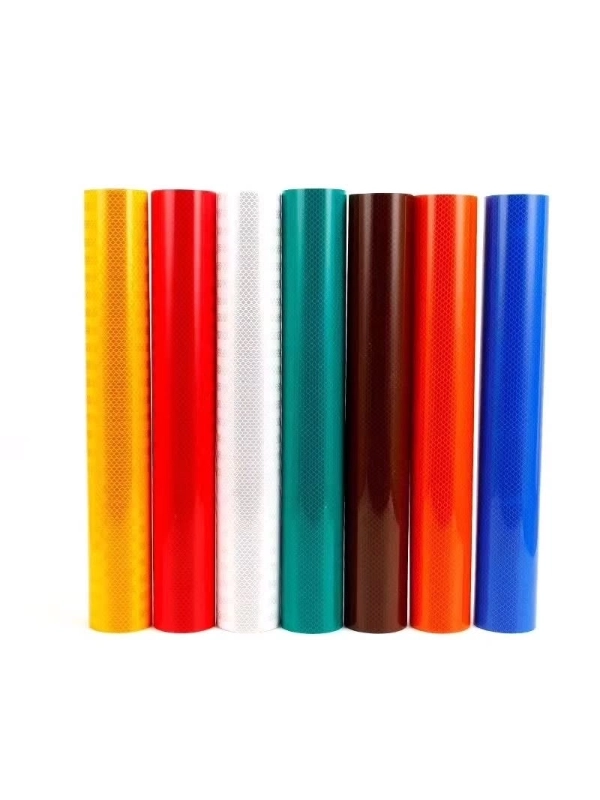
Moreover, the simplicity of putting on and versatility of High-Intensity Prism-like Reflective Sheets make them an attractive choice for manufacturers and end-users alike. They are able to be readily cut and affixed to a variety of substrates, allowing for personalized designs and setups. As localities and groups emphasize safety and visibility, the need for these advanced reflecting materials persists to rise, leading to more secure highways and enhanced public safety measures.
Attributes of High Intensity Grade Reflective Films
Premium Reflective Materials aim to improve visibility and safety in different lighting conditions. One of the primary features of this film is its superior reflective properties, which ensure that signs and road markings are easily visible during the day and at night. This is notably vital for traffic signs and emergency services where clarity can significantly impact security and regulatory compliance.
Another important feature of High-Intensity Reflective Films is their durability. These films are engineered to endure severe environmental conditions, including rain, breeze, and ultraviolet light. The substances used in their manufacture provide protection against color fading and deterioration over time, ensuring that the reflective features remain effective for a long time. This longevity makes them a trustworthy choice for local and commercial use.
Additionally, High-Intensity Reflective Films come in various colors and designs, allowing for flexibility in applications. https://www.mcreflective.com/category/products/reflective-film/ can be customized to meet specific needs, making them ideal for a range of environments from urban environments to countryside. This adaptability in turn enhances their effectiveness in improving safety and light visibility on roads and walkways.
Applications in Various Industries
Diamond Grade Reflective Film is commonly utilized in various industries because of its outstanding visibility and durability. In the transport sector, these films are essential for boosting safety on streets. They are commonly used on road signs, vehicle markings, and barriers. The intense multi-faceted reflective capabilities enhance the perception of important information in low light conditions, ensuring that drivers can spot and react to critical signage effectively.
In the contractor industry, Diamond Grade Reflective Film plays an vital role in worker safety and site supervision. Construction sites frequently employ this film for high-visibility vests, helmets, and barriers. The films offer security to workers by making them clearly visible by machinery operators and automobile traffic, significantly reducing the risk of accidents. The resilient nature of the film also endures weather conditions, preserving its reflective abilities over time.
Additionally, the sales sector is progressively utilizing Diamond Grade Reflective Film for advertising displays and displays. Store owners use this film to catch the attention of potential customers, especially during dusk. The gloss and liveliness of colors can draw attention to goods and sales, enhancing the customer experience. This versatility allows businesses to not only support safety within their premises but also to utilize the film creatively in promotional strategies.
Comparative Analysis of Reflective Film Varieties
While assessing reflective films, a key emphasis lies on the distinctions between high intensity prismatic reflective film and high intensity grade reflective film. High intensity prismatic reflective film uses a prism-like structure to improve the retroreflective characteristics, allowing it to reflect light back toward the source more efficiently . This quality makes it particularly suitable for environments where visibility is vital , including on road signs or vehicle markings. Its exceptional performance in low-light conditions highlights its practical advantages for safety applications.
Conversely, high intensity grade reflective film, although it still offers significant retroreflective capabilities , doesn’t integrate the same cutting-edge prismatic technology. Rather, it relies on traditional materials and is designed to offer good visibility at a lower cost . This type of film is commonly used in applications where extreme performance is not as critical , such as in standard signage or less demanding marking requirements . While it may not reach the same intensity levels as its prismatic counterpart, it still offers reliable performance for many everyday uses.
In conclusion, the choice between these two types of reflective films hinges on the specific needs of the task. For busy areas or situations requiring utmost visibility, high intensity prismatic reflective film remains the best choice. Conversely , for applications needing adequate visibility at the premium cost, high intensity grade reflective film serves as a practical alternative . Recognizing these distinctions can aid in making informed decisions when selecting reflective materials for various applications.